

Supervised Marriage & Family Therapist

Is Your Teen Addicted to Gaming? When It’s More Than Just a Game
When a teenager’s gaming starts affecting sleep, school, mood, or family relationships, it may be more than just a screen time issue. In this article, Zachariah Lail explores how problematic gaming can become part of a wider family pattern, and why rebuilding trust, communication, and connection often matters as much as setting limits.
When Gaming Becomes More Than a Hobby
If your teenager is gaming for hours, losing sleep, avoiding schoolwork, arguing about screen time, or becoming angry when asked to stop, it can be hard to know whether this is normal teenage behaviour or something more serious.
Gaming addiction is often talked about as an individual problem: too much screen time, poor self-control, or a child who simply refuses to stop. But for many families, gaming becomes more than a habit. It can become an escape from stress, conflict, loneliness, anxiety, or a household where communication has already started to break down.
There’s a different, and increasingly research-backed, way to look at it. Gaming rarely becomes a problem in isolation. It becomes a problem within a system, whether that’s a family under stress, a marriage losing connection, or a household where the game has quietly become the safest place in the house to be. Looking only at the gaming misses what the gaming is actually doing.
Gaming Disorder Is a Real Clinical Concern
Gaming disorder is a recognized clinical concern, not just a parenting buzzword. The World Health Organization added Gaming Disorder to its diagnostic manual in 2018, and it’s also listed as a condition warranting further clinical study, marked by excessive and prolonged gaming that leads to a cluster of cognitive and behavioral symptoms.
Like other addictive disorders, the presentation often includes a progressive loss of control, increased tolerance, and withdrawal.
It’s also more common than people assume. With billions of gamers worldwide, it’s no surprise that a meaningful minority develop patterns that cross from hobby into disorder, particularly adolescents and young adults. Research consistently places the average age of clinical onset in the mid teens, and gaming difficulties rarely show up alone. Studies have found significant overlap with anxiety, depression, ADHD, and social phobia.
None of this is meant to alarm anyone. Most young people who game heavily are doing exactly what it looks like: playing. But for a smaller group, gaming stops being fun and starts being function.
Why “Just Cut the Screen Time” Often Doesn’t Work
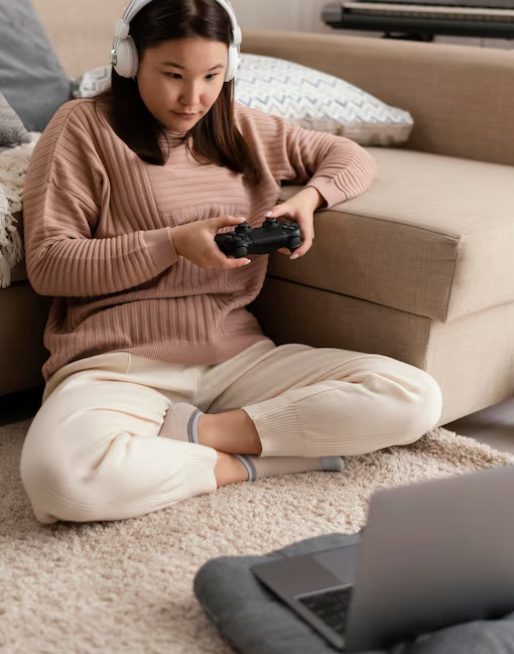
Most popular advice treats gaming addiction the way you’d treat a broken habit. Set limits. Install a tracking app. Take away the console. Sometimes that helps, at least for a while. But it treats the gaming as the source of the problem rather than as a symptom of something happening around it.
The research on adolescent gaming tells a more relational story. Teens struggling with problematic gaming consistently report less trust and communication, and more anger and alienation, in their relationships with both parents, compared to peers without gaming difficulties. Across the broader literature, high-conflict households, poor parental modeling, and emotional disconnection show up again and again as risk factors, while family cohesion, open communication, and parental confidence show up as protective ones.
In other words, the climate of the household matters just as much as the hours logged.
Three Common Family Patterns Behind Problematic Gaming
The Escape.
A 14 year old spends five or six hours online most nights. His parents argue constantly, usually not long after he’s gone upstairs. No one’s actually asked whether he’s escaping to something he loves or escaping from something he can’t control. Often, honestly, it’s both.
The Battleground.
A couple can’t agree on how to handle their son’s gaming. One wants strict limits. The other thinks it’s harmless. The fights about screen time have quietly become a stand in for a marriage that’s stopped talking about much else. The console isn’t the conflict. It’s where the conflict lives now.

The Quiet Adult.
Gaming addiction isn’t only a teenage issue. A husband logs on the moment he gets home and doesn’t log off until his wife is asleep. He’s not sneaking around. He’s just present less and less. It looks like a hobby. It functions like distance.
Why the “Problem Kid” Is Rarely the Whole Problem
One useful idea from family systems work is the concept of the identified patient, the person whose symptoms are most visible and who often gets labeled “the problem” even when the difficulty is really being carried by the whole family. The teenager who won’t put the controller down is usually the easiest person in the house to point to. He’s rarely the only person contributing to what’s happening.
This idea plays out clearly in how effective treatment actually works. Multidimensional Family Therapy (MDFT) is one of the more researched family-based approaches for adolescent gaming difficulties, and it doesn’t start by targeting the gaming directly. Its first stage focuses on helping the family move away from a purely disciplinary view of the gaming behavior and toward genuine empathy and connection. Only from there does treatment move into building parenting skills, rebuilding trust, and practicing new ways of communicating as a family.
The results are worth sitting with. In one randomized controlled trial, MDFT didn’t significantly change how many hours adolescents spent gaming, but after one year, every participant no longer met clinical criteria for internet gaming disorder. The shift wasn’t in the screen time. It was in what the gaming had been doing for the family, and what the family learned to offer instead.
How Family Therapy Can Help with Gaming Addiction

If you’re a parent worried about a teenager’s gaming, or a partner watching a relationship go quiet around a screen, here are a few things worth considering before, or alongside, any limit setting.
Get curious before you get strict. What does the gaming offer that seems to be missing elsewhere: connection, competence, control, or an escape from conflict? Limits without understanding tend to create secrecy rather than change.
Look at the whole household climate, not just the gamer. High conflict, emotional distance, or inconsistent parenting between caregivers are all associated with higher risk gaming patterns.
Rebuild connection, not just rules. Trust and open communication are consistently the strongest protective factors, more than any app or curfew.
Consider who else the pattern involves. A gaming “problem” in a marriage or a family is rarely about only one person.
When Parents Should Reach Out for Help
Gaming becomes a clinical concern when it starts crowding out sleep, relationships, school, or work, and when attempts to cut back repeatedly fail, not simply because someone plays a lot. If gaming has become the thing your family fights about, avoids talking about, or hides behind, that’s often a sign the pattern is bigger than the screen.
Working through this doesn’t mean confiscating a console. It means understanding what role the gaming has come to play in your family’s system, and building something that makes that role unnecessary.
If this sounds like your household, support is available and a conversation is a good place to start.
FAQ
-
Heavy gaming alone does not mean your teenager has a disorder. Concern increases when gaming involves loss of control, repeated failed attempts to cut back, continued gaming despite consequences, and disruption to sleep, school, relationships or daily responsibilities.
-
No. Screen time is about duration. Gaming addiction or gaming disorder is more about loss of control, priority over other parts of life, and continued use despite harm. WHO’s ICD-11 definition focuses on impaired control, increased priority given to gaming, and continuation despite negative consequences.
-
Sometimes limits are necessary, but removing access without understanding what gaming is doing emotionally often leads to more conflict, secrecy, or power struggles. Lasting change usually requires rebuilding trust, communication, and healthier family patterns.
-
Yes. Research on adolescent problematic gaming has examined family-based approaches such as Multidimensional Family Therapy. One randomized controlled trial found that MDFT reduced problematic gaming symptoms in adolescents, highlighting the importance of parent and family factors.
-
No. Adults can also use gaming to avoid stress, conflict, loneliness, or emotional distance. In couples and families, the concern is not only how many hours someone plays, but what gaming is replacing.
If gaming has become a source of conflict, distance, or concern in your family, you do not have to wait until things reach crisis point. At The Counselling Place, our family-based approach helps parents and teenagers understand what is driving the gaming pattern, rebuild communication, and develop healthier boundaries together.
Book a consultation to explore whether family therapy or our Plug Back In programme may be a good fit for your family.
Related Article
When Your Teen Refuses Help: A Parent’s Guide
Stuck in Power Struggles With Your Child?
Could ADHD or ASD Be Part of the Picture?
Related Services
Plug Back In: Teen Gaming Support Program
Break the Spell: Reclaim Your Attention, Energy and Life in a Digital World