
Why We Feel Lonely Even Around People: Understanding Emotional Disconnection

Supervised Marriage & Family Therapist

Why We Feel Lonely Even Around People: Understanding Emotional Disconnection
Feeling lonely does not always mean being physically alone. Many people feel emotionally disconnected even while surrounded by colleagues, family, social media, or busy schedules. Marriage & Family Therapist, Zachariah Lail, explores why loneliness happens, how modern life quietly deepens emotional isolation, and what helps people rebuild genuine human connection.
Loneliness. We all feel it sometimes, but what exactly does it mean? Loneliness is not about being alone, it is a feeling or perception that your social network is deficient in some way. Even if you are surrounded by people, feeling isolated or disconnected from others can amplify these feelings. Social media has made it very easy to develop unrealistic social expectations for our own social lives. What you see on social media is a highlight or snapshot, rather than the full picture of what is going on in another person’s life. In addition, social media and technology has made it easier to stay connected with others, but harder to feel connected with others.
Loneliness is not only difficult, but it is dangerous. Recent studies have equated it to being as harmful as smoking fifteen cigarettes a day. One of the most difficult, yet ironic, problems with loneliness is how hard it is to talk about with others. There can be a lot of embarrassment or shame wrapped up in feeling lonely or isolated. At the same time, it can worsen symptoms of anxiety and depression, further pushing people away.
In the Beginning, We Craved Connection…

Human beings possess a deep, biological drive to form and maintain lasting, positive, and significant relationships. This need to belong is a powerful force that shapes our cognitive processes, emotional patterns, health, and overall well-being. When our social environments function smoothly, we experience feelings of belonging, trust, and safety.
A common paradox discussed in modern spaces today is that individuals are constantly online and physically surrounded by people, but they still feel entirely alone. Over time, daily interactions have slowly fallen into a relationship rut. People begin to feel more like isolated units moving through a crowded room, or in more painful cases, completely invisible to the world around them.
Then We Slowly Drift Apart…
After settling into our fast-paced modern routines, daily life brings a heavy load of cumulative stressors. Work pressure, financial concerns, and emotional exhaustion consume our day-to-day energy. Instead of truly connecting, we begin merely co-existing with society. This is exactly where a subtle form of emotional neglect quietly starts to take place.
When we log onto social media, we expect to find quality relationships and community. Instead, we unconsciously become complacent, substituting real-world effort with digital snapshots. Without realizing it, qualitative intimacy begins fading. What used to feel like a healthy, independent lifestyle slowly shifts into a pattern of social withdrawal, less eye contact, greater interpersonal distancing, and less initiation of conversation.
Why Simply “Being Around People” Does Not Solve Loneliness
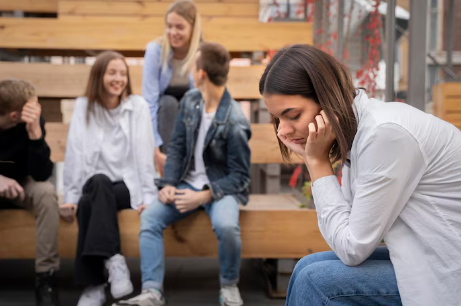
While putting ourselves in a crowd or an online forum might seem like an easy fix, physical proximity or digital access alone does not automatically solve loneliness.
Because:
Presence does not equal Social Connection
Access does not equal Vulnerability Skills
Interaction does not equal Emotional Safety
These are relational skills that many individuals were never explicitly taught.
Underneath the quiet struggle of loneliness are usually much deeper psychological dynamics:
Maladaptive Social Cognition:
A tendency to look at the world through hyper-vigilance, assuming others do not want to talk or that deep conversations will be awkward.
Negative Attributional Styles:
A tendency to blame ourselves internally for a single awkward interaction, assuming it will always be this way.
The Phone-Presence Trap:
Research highlights that the mere presence of a mobile device during a face-to-face conversation, even if unused, significantly reduces perceived empathy, trust, and closeness between people.
Why Loneliness Can Feel Worse After Relocation
Many expatriates in Singapore describe feeling socially surrounded yet emotionally disconnected after relocation. On the surface, life may appear full — work meetings, networking events, international communities, family responsibilities, or busy city living — but emotionally, many people quietly struggle with a loss of familiarity, belonging, and deeper connection.

Relocating to another country often disrupts the invisible support systems people once relied on. Close friendships, extended family, cultural familiarity, language nuances, routines, and even simple daily interactions that once felt effortless suddenly disappear. Rebuilding emotional safety in a new environment takes far longer than most people expect.
For many expatriates and internationally mobile professionals, relationships can also begin to feel more temporary or surface-level. Frequent relocations, demanding careers, long working hours, and uncertainty about how long people will remain in Singapore can make it harder to form deeper emotional bonds. Over time, this can create a sense of isolation even while living in a highly connected and socially active environment.
Cultural adjustment can add another layer of emotional strain. Some individuals may feel pressure to constantly adapt, perform, or “hold themselves together” while internally struggling with homesickness, identity shifts, relationship stress, or emotional exhaustion. Others may hesitate to open up because they fear burdening loved ones back home or worry that others may not fully understand their experience.
Loneliness after relocation is far more common than many people realize. It is not a personal failure, weakness, or inability to socialise. Often, it reflects the very human challenge of rebuilding trust, familiarity, and emotional connection in an entirely new environment. With time, intentional relationships, and the right support, many people gradually rebuild a stronger sense of belonging and emotional connection again.
Signs You May Be Experiencing Emotional Loneliness
Feeling emotionally disconnected even in relationships
Difficulty opening up to others
Feeling unseen or misunderstood
Social exhaustion after interactions
Constantly scrolling social media but feeling empty afterward
Frequently Asked Questions (FAQ)
-
No. Solitude is the voluntary and often restorative experience of being alone. Loneliness, however, is the painful feeling that your relationships lack emotional closeness, understanding, or meaningful connection. A person can feel lonely even while surrounded by other people.
-
Loneliness is not simply about the number of people around you. Many individuals feel emotionally disconnected despite having relationships, social media interactions, or busy schedules. When people feel unseen, misunderstood, emotionally unsafe, or unable to be vulnerable, loneliness can persist even in close social environments.
-
Yes. While social media helps people stay connected, it can sometimes deepen feelings of isolation. Online interactions often show only curated highlights of other people’s lives, leading to unrealistic comparisons and a false sense that everyone else is more connected, fulfilled, or socially successful.
-
Research shows that emotional loneliness and physical pain activate similar neurological pathways in the brain. Loneliness acts as an internal warning signal, reminding us that human connection is an important psychological and biological need.
-
Absolutely. Meaningful connection can be rebuilt at any stage of life. Recovery often involves gradually challenging negative assumptions about relationships, improving emotional vulnerability, rebuilding confidence in social situations, and creating opportunities for genuine connection over time.
-
It may help to seek professional support when loneliness becomes persistent or starts affecting emotional wellbeing, relationships, self-esteem, anxiety, depression, or daily functioning. Therapy can help uncover the deeper emotional patterns, fears, or experiences that may be contributing to ongoing disconnection.
When should someone seek counselling for loneliness?
If loneliness is accompanied by persistent anxiety, depression, a strong fear of intimacy, or a pattern of using substances to cope, it is time to speak with a professional. You do not have to wait until you are completely overwhelmed to seek support.
Turning the Tide: Actionable Steps and How Counseling Helps
Overcoming loneliness requires making small, intentional choices to shift how we interact with our minds, our environments, and the people around us. Here are some ways to begin rebuilding your connections:
Acknowledge the Feeling Without Judgment:
Recognize loneliness as a signal, not a status. Let it exist on its own, observing it with neutrality.
Reach Out and Practice Vulnerability:
Send a message, make a call, or schedule a meetup. Counseling helps you process underlying fears of intimacy,
giving you the emotional confidence to reach out.
Join Communities and Learn Relational Skills:
Engage in clubs, classes, or volunteer groups around shared interests. This can teach you the art of gradual, balanced self-disclosure to build genuine closeness.
Limit Social Media Comparisons:
Remember that what you see online is a highlight reel. Therapy addresses the maladaptive cognitions that social media
amplifies, retraining your brain to stop viewing a quiet day as a personal failure.
Be Patient and Build a Support System:
Building meaningful connections takes time. Celebrate small steps rather than expecting instant results.
If your life feels lonely despite a busy schedule or a full contact list, counseling can help uncover the patterns keeping you stuck. You do not have to navigate this alone. Sometimes the strongest communities are built not because we never felt isolated, but because we finally learned how to step through the hesitation, share our true selves, and connect deeply again.
At The Counselling Place Singapore, our psychologists, counsellors, and Marriage & Family Therapist support individuals struggling with emotional isolation, anxiety, relationship difficulties, relocation stress, and chronic loneliness. Book a confidential session with me to begin rebuilding meaningful connection.
Related Articles
Why Making Friends as an Adult Is Hard — And How to Build Real Connections
The Global Loneliness Epidemic
Adjusting to a New Location for Work or Study: Prioritizing Your Mental Health
How To Find Calm In A Constantly Connected Digital World