
Is Discipline or Trust More Important in Parenting? What the Marshmallow Experiment Really Shows

by Ben Ang
Counsellor / Psychotherapist / Parenting Coach

Is Discipline or Trust More Important in Parenting? What the Marshmallow Experiment Really Shows
If your child struggles to wait, gets frustrated easily, or seems impulsive, it may not be a discipline problem at all. Research shows that children’s ability to wait is strongly influenced by trust and predictability in their environment. When children trust that promises will be kept, they are more likely to delay gratification.
What the Marshmallow Experiment Really Tested
Many of us have heard of the famous marshmallow experiment.
A child is given a choice:
eat one marshmallow now, or wait and receive two later.
For years, this study has been used to highlight the importance of self-control, discipline, and delayed gratification. The message seems straightforward: children who can wait tend to do better in life.
From a parent’s perspective, this often reinforces a familiar belief:
“If my child struggles to wait, they need more discipline.”
Why Trust Matters More Than Discipline

What If It’s Not About Discipline? More recent interpretations of the marshmallow experiment suggest something deeper.
Children are not just asking, “Can I wait?”
They are also asking, often unconsciously,
“Can I trust what will happen next?”
In a follow-up study, researchers found that children’s ability to delay gratification changed significantly depending on whether the adult had previously been reliable.
When promises were kept, children were far more likely to wait. When promises were broken, they tended to choose the immediate reward instead (Kidd, Palmeri, & Aslin, 2013). This suggests that waiting is not simply about discipline, it is also about trust in the environment.
If a child has learned that promises are kept, that adults are consistent, and that their needs will be met, waiting makes sense. But when a child experiences unpredictability or repeated disappointment, waiting becomes a risk. Eating the marshmallow now is not a failure of discipline. It is an adaptation to uncertainty.
What Children Are Really Thinking
As adults, we often evaluate behaviour from the outside.
We see:
Impulsivity
Lack of patience
Difficulty delaying gratification
But from the inside, the child may be experiencing something very different:
“What if it doesn’t come?”
“What if I lose both?”
“Better to take what I can now.”
This is not defiance. This is self-protection. Children are constantly reading their environment:
Are adults reliable?
Are boundaries consistent?
Is the world predictable?
When the environment feels unstable, the nervous system shifts into a “now” orientation, prioritising immediate reward over uncertain future gain.
How Safety Shapes Behaviour

We often overestimate the role of willpower and underestimate the role of felt safety.
A child who feels safe:
Can tolerate waiting
Can manage frustration
Can trust that needs will be met later
A child who does not feel safe:
Seeks immediate relief
Struggles with emotional regulation
Finds it hard to think long-term
This is not about intelligence or character. It is about environmental learning. Put simply, our habits are not shaped by discipline alone but they are shaped by how safe we feel.
How Parents Build Trust and Emotional Security
If safety is the foundation, then parenting is less about control and more about consistency and reliability. Children learn trust not through big gestures, but through small, repeated experiences:
Promises that are kept
Boundaries that are consistent
Responses that are calm rather than unpredictable
Repair when things go wrong
Every kept promise sends a message:
“The future is safe. You can wait.”
Every broken or inconsistent experience sends another:
“Don’t count on it. Take what you can now.”
Over time, these experiences shape how a child approaches:
Money
Relationships
Work
Emotional regulation
When “Discipline” Misses the Point
It is easy to respond to behaviour by tightening control. But if the underlying issue is not discipline, but lack of trust in the environment, then discipline alone will not be effective and may even backfire. When a child feels pressured to behave in a certain way without feeling safe, it can increase:
Anxiety
Resistance
Emotional shutdown
The behaviour may change temporarily, but the underlying insecurity remains.
Promises, Trust, and Emotional Memory
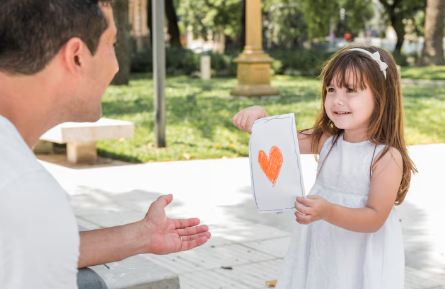
Children remember patterns more than words.
A parent may say, “I’ll come back later.”
But what matters is:
Did you come back?
Was it consistent?
Did it happen often enough for the child to believe it?
Trust is built through accumulated experience, not intention. When trust is broken repeatedly, children do not just feel disappointed. They begin to adjust their expectations of the world. They may stop waiting, stop trusting and stop believing that good things will come if they hold on.
From Survival to Growth
What looks like impatience in a child is often a survival strategy. And these patterns do not stay in childhood. In adulthood, they may show up as:
Difficulty saving money
Seeking short-term relief
Struggling with long-term planning
Challenges in relationships and trust
Not because they lack discipline but because, at some point they learned:
“The future is not reliable.”
Practical Ways to Support Your Child
The goal is not perfection. It is consistency over time.
A few practical anchors:
1. Keep promises — especially the small ones
Small promises build big trust.
2. Be predictable in your responses
Children feel safer when they know what to expect.
3. Repair when you fall short
“I said I would, and I didn’t. I’m sorry.”
Repair builds trust more than perfection.
4. Help children tolerate feelings
Waiting is hard. Frustration is real.
Support them in feeling it, not dismissing it.
5. Prioritise relationship before behaviour
A regulated child learns better than a fearful one.
FAQ
-
No. While it was originally interpreted as a measure of self-control, newer research shows that children’s ability to wait depends heavily on trust. If a child believes that promises will be kept, they are more likely to delay gratification.
-
Emotional regulation refers to a child’s ability to manage feelings such as frustration, disappointment, or anxiety. It develops over time through support, modelling, and a stable environment.
-
Trust shapes how a child responds to the future. When children experience consistency and reliability, they are more likely to tolerate waiting, manage frustration, and regulate emotions. Without trust, behaviour often becomes more impulsive and reactive.
-
Not always. What appears as impulsivity can be a response to uncertainty or emotional stress. Children may act quickly to secure what they can now, especially if they are unsure about future outcomes.
-
Self-control develops through consistent, predictable parenting. This includes:
keeping promises
maintaining clear boundaries
responding calmly
repairing when mistakes happen
These experiences help children feel safe enough to wait and regulate themselves.
-
Emotional regulation refers to a child’s ability to manage feelings such as frustration, disappointment, or anxiety. It develops over time through support, modelling, and a stable environment.
An Invitation
If you find yourself navigating challenges around your child’s behaviour, trust, or emotional regulation or even noticing similar patterns in your own responses, you do not have to figure this out alone. Exploring this with the right support can open up new ways of understanding and responding that feel more effective and sustainable. Speaking with a psychologist, counsellor, psychotherapist or parenting coach can help uncover what’s beneath the behaviour.
At The Counselling Place, our counsellors work with individuals, parents, and families to better understand what sits beneath behaviour, strengthen emotional safety, and build more consistent, supportive relationships. Sometimes, what appears to be a discipline issue is deeply connected to trust, safety, and relational experiences.
If this resonates with you, you may consider booking a session with me to explore these patterns more deeply and find ways forward that support both connection and growth.
Book a confidential session with our team today.