
Sibling Rivalry: Why Your Kids Keep Fighting and What Parents Can Do

Counsellor / Parenting Coach / Career Coach
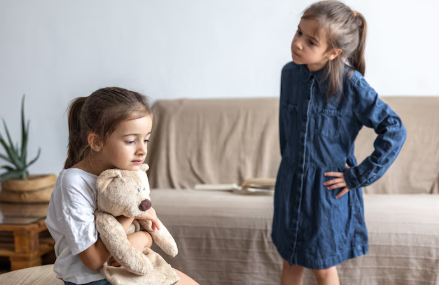
Sibling Rivalry: Why Your Kids Keep Fighting and What Parents Can Do
Why are my kids always fighting? Sibling rivalry can leave parents exhausted and wondering when to step in—or whether they’re making things worse. Counsellor & Parenting Coach, Paula Brunning, explains why siblings fight and shares practical ways to help children manage jealousy, regulate emotions, communicate better and turn everyday conflicts into lifelong relationship skills.
Sibling Rivalry: Why Your Kids Keep Fighting and What Parents Can Do
“Why are my kids always fighting?”
It’s one of the most common frustrations parents face. One minute your children are laughing together, and the next they’re arguing over a toy, a seat in the car, whose turn it is—or who Mum or Dad loves more.
Sibling rivalry is a normal part of growing up, but frequent fighting can leave parents exhausted and wondering when to step in, what to say, and whether the conflict has gone too far.
The good news is that sibling conflict can also be an opportunity for children to learn important relationship skills. With the right guidance, children can learn to manage jealousy, regulate strong emotions, understand different perspectives, communicate their needs and resolve disagreements.
Rather than simply stopping every argument, parents can learn how to coach children through sibling conflict so they gradually become better at handling disagreements themselves.
What Is Sibling Rivalry and Why Does It Happen?
Sibling rivalry refers to the competition, conflict, jealousy, and resentment that can occur between brothers and sisters. According to the American Psychological Association, rivalry often develops as children compete for resources they value, including attention, approval, fairness, possessions, or independence.
Rivalry is not a sign that children dislike one another. In fact, siblings who argue frequently often love each other deeply. The challenge is that they are still learning how to manage strong emotions while sharing the same home, parents, and routines.
Children are also developing their identities. They naturally compare themselves with their siblings, asking questions such as:
“Who is better?”
“Who gets more attention?”
“Who is Dad’s favourite?”
“Who gets into trouble more?”
“Who matters most?”
These comparisons are a normal part of development, and without guidance they can lead to resentment, false beliefs and ongoing or escalating conflict.
Why Do Siblings Fight?
Siblings may fight for many reasons, including:
competing for a parent’s attention or approval
jealousy or perceived favouritism
disagreements about toys, possessions or personal space
different personalities and temperaments
differences in age and developmental needs
frustration about rules or fairness
difficulty managing strong emotions
wanting greater independence or control
Often, the argument parents see is only the surface issue. A fight over a toy, for example, may also reflect feelings of unfairness, jealousy or wanting a sibling’s attention.
Understanding what is driving the conflict can help parents respond to the need behind the argument rather than simply deciding who is right or wrong.
Is It Normal for Siblings to Fight?
Yes. Some sibling conflict is completely normal.
Disagreements over toys, personal space, rules, or fairness happen in nearly every family.
As children grow, they are learning to negotiate, compromise, share, and express their opinions. These skills take years to develop and parents can foster these skills effectively.
How Parental Favouritism Can Fuel Sibling Rivalry
One of the biggest contributors to sibling rivalry is the perception of parental favouritism.
Research consistently shows that children are remarkably sensitive to differences in parental attention, praise, discipline, or affection. Interestingly, parents often believe they are treating everyone fairly, while siblings experience the situation very differently.
Sometimes favouritism is unintentional.
Perhaps one child needs more academic support.
Another may have health challenges.
One may simply be quieter while another requires near constant attention.
While parents naturally respond to children’s differing needs, children often interpret these differences as meaning:
“You love them more.”
“I’m not important.”
“They always get away with everything.”
“You never listen to me.”
Even comments intended as compliments can unintentionally create comparison.
Examples include:
“Why can’t you be organised (like your sister)?”
“He’s always been the sporty one.”
“She’s the clever child.”
“You’re the difficult one.”
Over time these labels can shape identity and increase rivalry.
Instead, try noticing each child's individual strengths without comparing them.
For example:
“I love how thoughtful you were today.”
“You worked really hard on that.”
“I noticed your kindness.”
“You kept trying even when it was difficult.”
Children thrive when they feel appreciated for who they are rather than how they compare with someone else.
Both Perspectives Can Be True
One of the most valuable lessons parents can teach is that people can experience the same event differently.
Adults know this happens in marriages, friendships, and workplaces. Children need opportunities to practise understanding this concept early in life.
Imagine two siblings arguing over a board game.
One says, “You cheated!”
The other insists, “I didn’t know that was the rule.”
Instead of deciding immediately who is right, parents can help both children explore each perspective.
You might say: “Help me understand what happened from your point of view.”
Then ask the other child the same question.
This communicates an important life lesson:
Different perspectives do not automatically make one person wrong.
Once both children feel heard, parents can shift the conversation towards collaboration.
“Now that we understand both viewpoints, how can we solve this together?”
This moves children away from blame and towards problem-solving.
How to Handle Sibling Fighting: A 6-Step Conflict Resolution Process
Conflict itself is not the problem.
The problem is when children do not know how to resolve it respectfully.
Parents can coach children through a simple conflict resolution process:
Pause before reacting.
Allow each child to explain their perspective without interruption.
Help identify the feelings involved.
Encourage brainstorming several possible solutions.
Choose a solution that feels fair to everyone.
Review afterwards and discuss what worked.
Rather than solving every disagreement for children, parents gradually become coaches who help children build independence.
These moments become valuable practice for future friendships, romantic relationships, and workplace interactions.
Help Children Calm Down Before Solving the Problem
Children cannot solve problems well when they are overwhelmed by anger, frustration, or disappointment. Before teaching problem-solving, parents often need to help children regulate their emotions.
Self-regulation skills include:
taking slow breaths
stepping away briefly to calm down
counting to ten
squeezing a stress ball
asking for a break
noticing physical signs of anger before they explode
Parents model these skills every day. When adults stay calm during conflict, children learn that difficult emotions can be managed safely. A calm parent helps create calm children.
Teach Children What to Say Instead of Attacking Each Other
Many sibling arguments escalate because children attack one another rather than describing their own experience. Teaching simple communication patterns can dramatically reduce conflict.
Instead of:
“You’re so mean!”
Children can learn:
“I felt upset when my toy was taken without asking.”
Instead of:
“You never let me play!”
Try:
“I’d like a turn when you’re finished.”
This approach, borrowed from non-violent communication, encourages children to describe:
what happened
how they feel
what they need
what they are requesting
This approach shifts conversations away from blame and towards understanding. These are skills that are useful throughout life, making childhood the ideal time to begin.
Help Children Put Their Feelings Into Words
Many children know only a handful of emotional words:
Happy.
Sad.
Mad.
Yet emotional experiences are far richer.
Helping children build an emotional vocabulary improves emotional intelligence and reduces conflict.
Parents can introduce words such as:
disappointed
frustrated
embarrassed
worried
jealous
lonely
excited
confused
overwhelmed
proud
The more accurately children can name emotions, the less likely they are to express them through aggression.
Simple questions can help children connect emotions with healthy responses rather than impulsive reactions:
“What are you feeling right now?”
“Where do you notice that feeling in your body?”
“What do you need at the moment?”
Frequently Asked Questions (FAQ)
-
Yes. Disagreements between siblings are a normal part of family life and can give children opportunities to learn skills such as sharing, negotiation, emotional regulation and problem-solving. The goal is not to eliminate every disagreement, but to help children learn healthier ways to handle conflict.
-
Not every disagreement requires a parent to immediately solve the problem. When it is safe to do so, parents can help children explain their perspectives, identify their feelings and work towards a solution together. Intervention becomes more important when conflict becomes aggressive, unsafe or repeatedly overwhelms the children’s ability to resolve it.
-
No. Children can have a close and loving relationship while still arguing frequently. Siblings share parents, possessions, routines and space while also developing their own identities and independence, which naturally creates opportunities for conflict.
-
Avoid comparing or labelling children, and recognise each child’s individual strengths and needs. Children may interpret differences in attention, praise or discipline as evidence that a sibling is more loved or valued, even when that is not the parent's intention.
-
Consider seeking professional counselling support when sibling conflict becomes constant or aggressive, when someone is regularly being hurt or intimidated, or when the conflict is significantly affecting a child or the family’s wellbeing.
Sibling Conflict Is About Progress, Not Perfection
No family eliminates sibling rivalry completely.
Arguments will happen.
Feelings will get hurt.
Mistakes will be made.
What matters most is not raising children who never disagree, but raising children who know how to repair relationships after conflict.
Every disagreement offers an opportunity to practise listening, empathy, emotional regulation, respectful communication, and collaborative problem-solving.
Over time, these everyday moments help siblings move from seeing one another as competitors to becoming lifelong allies.
When to Get Help With Sibling Conflict
If sibling fighting has become constant, aggressive or is affecting your family's wellbeing, counselling can help you understand what is driving the conflict and develop strategies suited to your children's ages, personalities and needs.
Small changes in how parents respond to sibling conflict can make a meaningful difference to family relationships and help each child feel heard, valued and understood. Reach out to me for support if sibling rivalry is a challenge you are facing. We can work together to discover how small changes in parent actions can often lead to significant improvements in family relationships, creating a home where every child feels heard, valued, and loved.
Related Articles
Little People, Big Emotions: How to Support Your Child’s Emotional Development
Teaching Children The 5 Languages of Apology
Parenting Empathy in Children: A Guide to Raising Compassionate and Understanding Kids
Parent Self-Regulation – Managing Our Own Emotions Effectively