
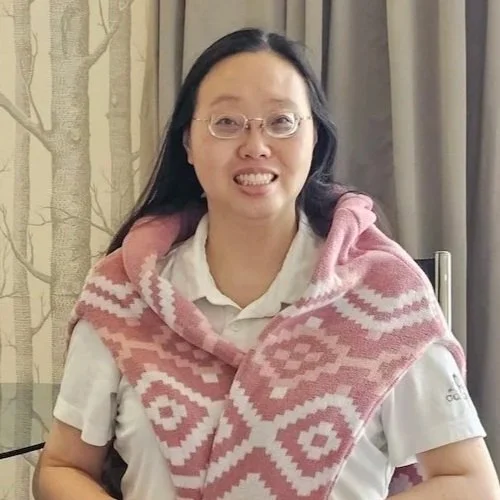
Ho Shee Wai
Founder of TCP & Clinical Director | Registered Psychologist | Clinical Supervisor
“I help couples and individuals navigate complex relationship challenges—including cross-cultural marriages and relationships where ADHD or autism is involved—to rebuild understanding, strengthen connection and create lasting change. Drawing on more than 27 years of clinical experience, I provide practical, evidence-based support tailored to each unique situation.”
Overview
-
BA in Psychology & Sociology
National University of Singapore, SingaporeBA (Hons) in Psychology
University of Newscastle, Australia
MA in Psychology
University of Newscastle, AustraliaCertificate in Eye-Movement Desensitization Reprocessing (EMDR)
EMDR Institute, USA
FOCCUS Marriage Preparation & Enrichment Programme Facilitator
FOCCUS, USA
Gottman Method Couples Therapy L2
The Gottman Institute, USACertificate in Advanced Training in Ericksonian Psychotherapy and Hypnosis
Milton H. Erickson Foundation, Inc.Cogmed Working Memory Training® Coach
Certificate in Dialectical Behavior Therapy (DBT)
Certified Clinical Dementia Rating (CDR) Rater
-
Registered Psychologist
Psychology Board of Australia &
Singapore Psychological SocietyClinical Supervisor
Psychology Board of Australia &
Singapore Psychological SocietyMember
Australian Psychological Society &
Singapore Psychological SocietyCrisis Responder
National Organization for Victim Advocacy (NOVA)
-
Who I work with
Children | Teens | Adults | Couples | FamiliesAreas of support
• Addiction
• ADHD/ADD
• Anxiety
• Depression
• Divorce / separation
• Eating disorders
• Grief and loss
• Infertility & adoption
• Intimacy issues / sexuality issues
• LGBTQIA+
• Marriage preparation & enrichment
• Pain management
• Parental alienation
• Phobias
• Psychological assessments
• Relationship issues
• Sexual assault
• Trauma / PTSD
-
• English
• Mandarin
Listening ■■■■■
Speaking ■■■■■• Cantonese
Listening ■■■■■
Speaking ■■□□□
-
• Eye Movement Desensitization and Reprocessing (EMDR)
• Acceptance Commitment Therapy (ACT)
• Dialectic Behavior Therapy (DBT)
• Gottman Couple Therapy
• Ericksonian Therapy
• Gestalt Therapy
• Family System Therapy
• Logotherapy
• Cognitive Behavioral Therapy (CBT)
• Cogmed Working Memory Training
-
Clinical Hours
Online:
Tue, Wed, Fri & Sat | 10am-4.50pmIn Person:
Fri & Sat | 10am-4.50pmTue, Wed, Fri, Sat 9am & Fri 5pm-7.50pm available at +$40/50 mins
Rates
$300 during office hours
$310 outside office hours
Biography
With more than 27 years of clinical experience, Shee Wai has been supporting expatriates in Singapore since 2002. Having lived in Singapore, Australia, Malaysia and Korea herself, she understands firsthand the emotional, cultural and relationship challenges that can arise when building a life in a new country.
Shee Wai is the Founder and Director of The Counselling Place. She holds a Masters Degree in Psychology from the University of Newcastle, Australia, a certificate in Eye-Movement Desensitization Reprocessing (EMDR) from the EMDR Institute, USA, and a certificate in Advanced Training in Ericksonian Psychotherapy and Hypnosis from the Milton H. Erickson Foundation, Inc.
She is an accredited facilitator for the FOCCUS marriage preparation and enrichment programme. She has also completed Level 2 Training in Gottman Method Couples Therapy and uses Gottman Method Couple Therapy in her work. She is also certified with NOVA, National Organization for Victim Assistance, USA. Shee Wai is also a certified Cogmed Working Memory Training®Coach. She also holds certification in Dialectical Behavior Therapy (DBT) in the USA. She is a certified Clinical Dementia Rating (CDR) rater. She has extensive clinical experience working with children, adolescents, adults, couples and families in both Australia and Singapore. She has provided individual and group training and supervision to other counsellors.
Shee Wai specializes in helping couples navigate some of their most complex relationship challenges, including ongoing conflict, separation and divorce, marriage preparation and enrichment, cross-cultural relationships, parenting concerns and parental alienation. She also has particular expertise in supporting couples where one partner has a diagnosed or suspected condition such as ADHD, autism spectrum disorder (formerly Asperger syndrome), depression, anxiety, OCD, alcohol use disorder or sex addiction, and understands the unique impact these can have on communication, intimacy and the relationship as a whole. She is also experienced in helping couples address intimacy and sexuality concerns that may arise within committed relationships.
Shee Wai works with individuals on stress management, depression, anxiety, phobia, pain management, and grief and loss. She is trained in Eye Movement Desensitization and Reprocessing (EMDR), an evidence-based therapy for trauma, enabling her to help clients process and recover from distressing experiences such as childhood adversity, accidents, assault, sexual abuse and other painful life events.
Shee Wai also provides psychological assessment for adults and children. Having been a Home Study assessor for adoption, she is also able to provide pre-adoption and post-adoption counselling for individuals and couples on adoption and fertility / infertility related issues.
Shee Wai is registered as a Psychologist with Psychology Board of Australia and is approved as a Supervisor. She is also registered as a Psychologist with the Singapore Psychological Society and is approved as a Supervisor. She is a member of both the Australian Psychological Society and the Singapore Psychological Society. In addition to her clinical work, Shee Wai regularly provides training, supervision and professional consultation, and has been interviewed by newspapers, magazines, radio and television programmes on a wide range of psychological and relationship topics.








You've asked your partner to attend couples counselling, but they refuse. Does that mean you're stuck with the relationship as it is? Drawing on 28 years of counselling experience, Registered Psychologist Ho Shee Wai explains how working on your own responses can change relationship patterns, how to invite a reluctant partner into the process, and how to recognise the limits of what one person can achieve.