
Marriage & Family Therapist
When Stress Shows Up in Your Body Before Your Mind
Your jaw aches, your stomach churns before work, or you wake up exhausted despite a full night's sleep. Could stress be affecting your body before you even recognise it? Learn the physical signs of stress, why they happen, and when it may be time to seek support with Marriage & Family Therapist, Zachariah Lail.
You've had a tight chest for weeks, a stomach that churns every Sunday night, and a jaw that's sore when you wake up. Maybe you've even visited the pharmacy or seen a doctor, but nothing obvious has turned up.
If someone asked how you were doing, you would probably say, "Fine, just busy."
But your body seems to be telling a different story.
The physical signs of stress can sometimes become noticeable before we consciously recognise how overwhelmed we feel. Muscle tension, digestive discomfort, changes in breathing, and disrupted sleep can all be connected to the way our nervous system responds to pressure.
Understanding that connection can help us recognise when our bodies may be asking for attention.
Why Does Stress Affect the Body?
Stress doesn't only exist in our thoughts. It also affects our nervous system and how our bodies function.
When we experience a stressful situation, our body's fight-or-flight response prepares us to respond. Stress hormones, including adrenaline and cortisol, contribute to changes in heart rate, breathing, alertness, and energy availability.
This response can be useful when we face immediate danger. But our nervous system can also react to everyday psychological pressures, such as workplace demands, relationship difficulties, financial uncertainty, or ongoing responsibilities.
When stress is frequent or prolonged, we may spend more time feeling physically tense or on edge, even when there is no immediate threat.
This is part of the mind-body connection: our thoughts and emotions influence physical sensations, while those sensations can also affect how safe, anxious, or overwhelmed we feel.
Common Physical Signs of Stress
Everyone responds to stress differently. Some people notice emotional changes first, while others become aware of physical discomfort long before they identify what is troubling them.
Common physical symptoms associated with stress include:
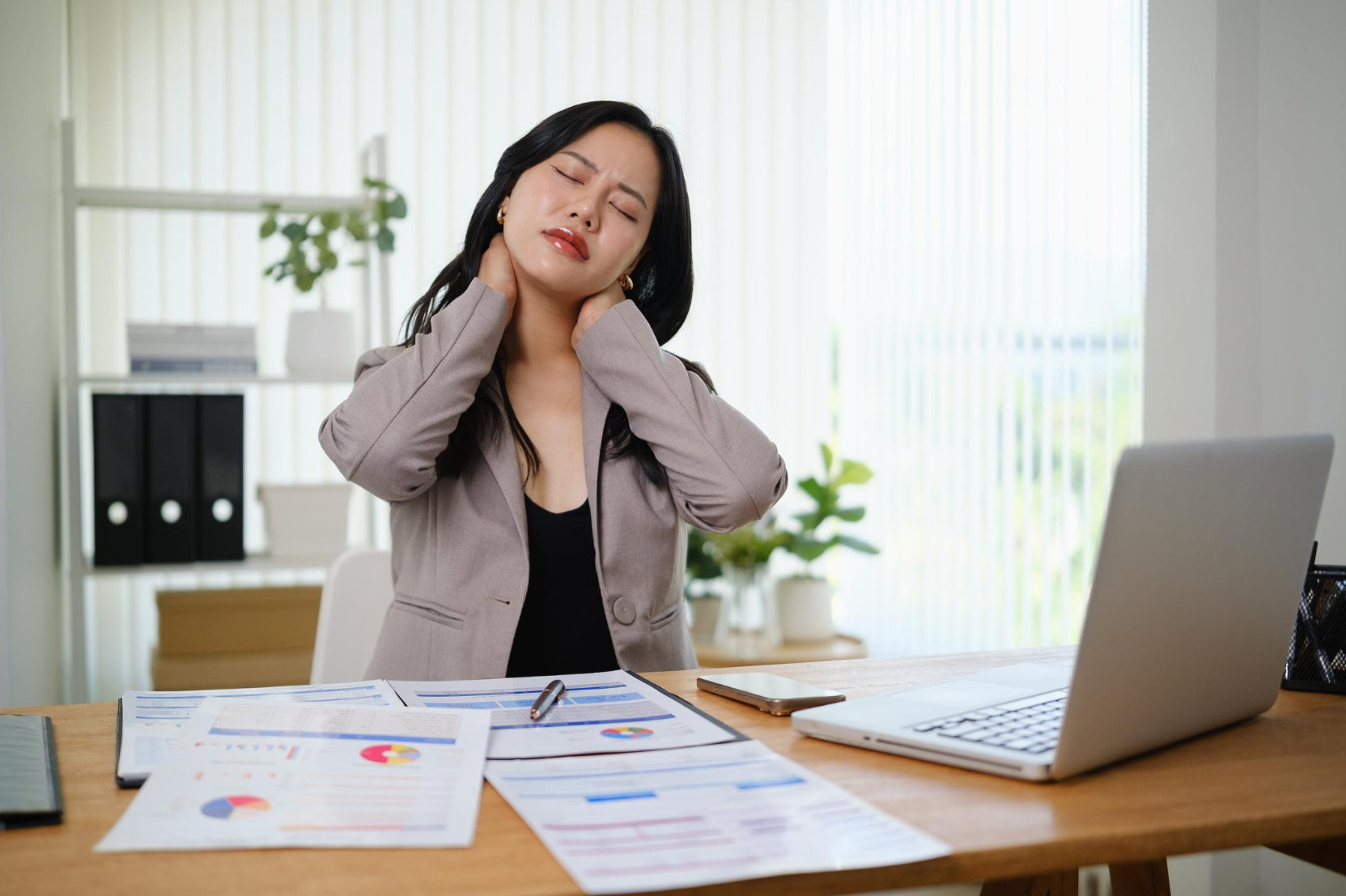
Muscle tension and headaches: Tightness in the neck, shoulders, and jaw, sometimes accompanied by tension headaches or teeth grinding.
Stomach and digestive problems: Nausea, abdominal discomfort, a knotted stomach, changes in appetite, or changes in bowel habits.
Changes in breathing and heartbeat: Rapid breathing, palpitations, or a sensation of chest tightness.
Sleep difficulties: Trouble falling asleep, waking during the night, or feeling tired despite spending enough time in bed.
Fatigue and reduced recovery: Persistent tiredness and feeling physically or mentally drained after ordinary activities.
These symptoms are not specific to stress. They can also have medical causes, so new, persistent, or concerning symptoms should be assessed by a healthcare professional.
Four People, Four Ways Stress Shows Up
Sometimes it is easier to recognise the mind-body connection through everyday experiences.
The Clenched Jaw
He insists work isn't bothering him. He's keeping up with deadlines, attending meetings, and getting everything done.
But he wakes with a sore jaw and develops headaches most afternoons. He has also noticed that he clenches his teeth while concentrating.
He may not feel emotionally overwhelmed, but his physical tension suggests that his daily pressures deserve closer attention.
The Sunday Stomach
She feels relatively comfortable throughout the weekend.
Then Sunday afternoon arrives, and her stomach starts to tighten. By evening, she feels nauseated and restless.
She's never really connected these sensations to Monday morning. But when she begins paying attention, she notices that her symptoms regularly appear before the working week.
The Constant Cold
He has been unwell several times over recent months. Each time, he pushes through, continues working, and returns to his usual routine before feeling fully recovered.
His long hours, limited sleep, and lack of downtime may be affecting his ability to rest and recover.
Although recurrent illness should be medically assessed, he may also benefit from examining how much pressure he is placing on himself.
The Restless Sleeper
She's in bed by 10pm, but her body doesn't seem ready to settle.
She lies awake feeling restless, eventually falls asleep, and wakes again in the early hours. By morning, she's exhausted.
She blames the mattress, the temperature, or her busy schedule. Yet she rarely considers how much tension she carries into the evening.
These examples illustrate how stress can appear differently from one person to another. They are not diagnoses, but they may help you recognise patterns worth exploring.
Why Do We Miss the Physical Symptoms of Stress?
Many of us have learned to push through discomfort.
We treat a headache as an inconvenience, poor sleep as a scheduling problem, or tense shoulders as part of sitting at a desk all day.
And sometimes those explanations are correct.
But when symptoms keep returning, we may overlook the possibility that emotional pressure is contributing.
For some people, it also feels easier to say "my back hurts" than "I'm overwhelmed."
Physical discomfort is tangible. Emotional stress can be harder to identify, particularly when we have become accustomed to being busy, responsible, or constantly available to others.
Recognising stress does not mean dismissing physical symptoms or assuming they are imagined. The discomfort is real, and medical and psychological factors can sometimes exist together.
Six Small Ways to Listen to Your Body

You don't necessarily need a dramatic lifestyle change to begin noticing your stress patterns.
Small moments of awareness throughout the day can help you understand how pressure affects you.
Check in with your body. Pause occasionally to notice your jaw, shoulders, hands, and breathing. Are you holding tension without realising it?
Try slowing your breathing. If comfortable, breathe gently and allow your exhale to become slightly longer. Avoid forcing deep breaths or continuing if you feel dizzy or uncomfortable.
Move a little. Take a short walk, stretch, or change your position after sitting for long periods. Gentle movement can help reduce tension and create a break from stressful activity.
Notice recurring patterns. Keep a simple note of when symptoms appear. Do headaches follow difficult meetings? Does your stomach tighten before the working week?
Create a transition between work and rest. Give yourself a few minutes to switch off from work, rather than expecting your body to relax immediately after a demanding day.
Practise releasing tension. Relax your jaw, lower your shoulders, soften your hands, and notice how your body feels when you stop bracing.
These techniques may help manage everyday stress, but they are not substitutes for medical assessment or professional support when symptoms persist.
When Should You Seek Help for Stress-Related Physical Symptoms?
If you notice new, unexplained, or persistent physical symptoms, speak with a doctor first.
Chest pain or tightness deserves particular care. Sudden or severe chest discomfort, especially with breathlessness, sweating, faintness, or pain spreading to the arm, jaw, or back, requires emergency medical attention.
Once medical concerns have been appropriately assessed, counselling may be helpful when:
Physical tension repeatedly appears during stressful periods.
Worry, pressure, or overthinking interferes with sleep.
You struggle to relax, even when you have time to rest.
You feel overwhelmed but have difficulty identifying or expressing your emotions.
Stress is affecting your relationships, work, or overall quality of life.
Counselling can provide space to explore what is contributing to your stress, recognise patterns in your responses, and develop ways to manage emotional and physical tension.
You don't have to wait until you reach a breaking point before seeking support.
Frequently Asked Questions
Can stress cause physical symptoms even when I don't feel anxious?
Yes. Stress can affect your body even when you don't consciously recognise feeling worried or overwhelmed. Some people notice muscle tension, digestive discomfort, or sleep changes before identifying the pressures contributing to them.
However, physical symptoms should not automatically be attributed to stress without considering medical causes.
Does this mean the symptoms are "all in my head"?
Not at all. Physical symptoms associated with stress are real. Stress involves physiological changes that can affect muscles, breathing, digestion, sleep, and other bodily functions.
Recognising a possible stress connection does not mean your discomfort is imaginary.
How do I know whether it's stress or a medical condition?
You often cannot determine this from symptoms alone.
Medical conditions and stress can produce overlapping symptoms, and sometimes both contribute. A healthcare professional can help assess possible physical causes.
If stress appears to be playing a role, psychological support may be a useful part of managing the problem.
Can counselling help with physical symptoms of stress?
Counselling can help you understand stress triggers, recognise emotional and behavioural patterns, and develop coping strategies.
For some people, reducing stress may also help with associated physical tension, sleep difficulties, and other symptoms.
Results vary, and counselling should complement rather than replace appropriate medical care.
Your Body May Be Asking for More Than Rest
If your jaw is always tight, your stomach knots before work, or you find yourself exhausted despite trying to rest, it may be worth looking beyond the symptoms themselves.
What pressures have you been carrying? When do you feel most tense? And how often do you give yourself permission to slow down?
You don't have to figure everything out alone.
At The Counselling Place in Singapore, our counselling team can help you explore the sources of ongoing stress, understand your responses, and develop practical ways to manage the pressures affecting your wellbeing.
We offer in-person and online counselling, with appointments available through our online booking system.
Book a counselling session and take the next step toward understanding what your mind and body may be telling you.