
Does Online Counselling Work? Is It Right for You?

Psychologist / Supervised Counsellor
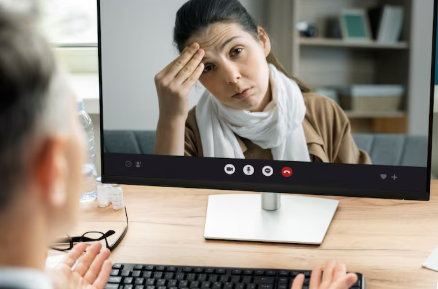
Does Online Counselling Work? Is It Right for You?
Could online counselling work for you? Psychologist & Supervised Counsellor Ewelina Sawicka explores the evidence, the connection with your therapist and practical questions to help you choose between online and in-person sessions.
Online counselling can be effective. Whether it is right for you depends on the support you need, the privacy you have and how comfortable you feel talking over video.
Perhaps you have been thinking about counselling for a while, but getting to an appointment feels difficult alongside work, parenting or other responsibilities. Or perhaps you like the convenience of online sessions but wonder whether a conversation through a screen could feel personal enough.
Both the practical arrangements and the connection with your therapist deserve consideration. Here is what the evidence tells us, and what to think about before you book.
What is online counselling?
Online counselling allows you to meet a psychologist, counsellor or psychotherapist through a video call at an agreed appointment time. You can discuss what has been troubling you, explore patterns in your thoughts or relationships, and work towards goals together.
This article focuses on live video sessions. Messaging services and self-guided programmes are different formats; research about one does not automatically apply to the others.
At The Counselling Place, online counselling sessions take place through Google Meet. You need a suitable device, a reliable internet connection and somewhere you can speak privately.
Is online counselling as effective as in person therapy?
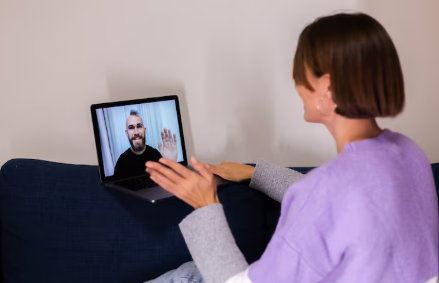
It can be, although the evidence depends on the condition and the treatment being provided.
A review of nine trials involving 1,268 people with depression found no statistically significant difference in depression severity immediately after treatment between real-time telehealth and face-to-face care. The review included both telephone and video sessions. These findings support remote care as a useful option for depression; they do not establish that every online service works equally well for every concern. Scott and colleagues, 2022.
Your therapist can help you consider whether online sessions suit your needs and review how the arrangement is working as counselling progresses.
Can you build a connection with a therapist online?
It is understandable to wonder whether a psychologist, counsellor, or psychotherapist can really understand you through a screen, particularly if you already find it difficult to talk about yourself.
A meta-analysis covering 18 publications found no statistically significant difference between video and in-person psychotherapy in how clients or therapists rated the therapeutic alliance: the working relationship they develop together. Seuling and colleagues, 2024.
In your own sessions, notice whether you feel listened to, can ask questions and can tell your therapist when something does not feel helpful. These are useful things to discuss whichever format you choose.
You also do not have to share everything immediately. If being on camera feels awkward, or you are unsure where to begin, you can start by saying so.
Online vs in-person counselling: which might suit you?
Avoiding the journey to a clinic can make counselling easier to fit into your week. A familiar room may also help you settle into the conversation. For someone else, leaving home and entering a separate space may be an important part of the appointment.
Use these questions to think about what would help you participate comfortably.
| What matters to you? | Online counselling may suit you if… | In-person counselling may suit you if… |
|---|---|---|
| Time and travel | The journey makes appointments difficult, but you can protect time for the session itself. | You can travel to appointments and value a separate place for counselling. |
| Privacy | You have a room where you can speak without being overheard or interrupted. | A clinic offers privacy that is difficult to find at home or work. |
| Personal comfort | Familiar surroundings help you feel more at ease. | Being away from everyday surroundings makes it easier to focus on yourself. |
| Communication | You feel comfortable talking on video and have a reliable connection. | You find it easier to communicate when you and your therapist share a room. |
For people who have moved countries, language and cultural understanding may also matter when choosing a therapist. Online appointments can widen the options beyond the immediate neighbourhood, although your therapist will need to confirm whether they can work with you where you are located.
When might online counselling be less suitable?
Before booking, picture yourself discussing something sensitive. Could you talk about your partner, family or work without lowering your voice or worrying about who might hear?
If you would be watching the door throughout the session, home may not give you the privacy you need. Headphones help keep your therapist’s words private, but people nearby may still hear your side of the conversation.
Repeated connection problems, difficulty concentrating on a screen or feeling unsafe in your surroundings are also reasons to discuss another arrangement. Some situations require more immediate or intensive support than a routine online appointment can provide. If you are in immediate danger, seek local emergency help. BACP guidance on online and phone counselling.
How to prepare for your first online counselling session
A little preparation can make it easier to give the conversation your attention:
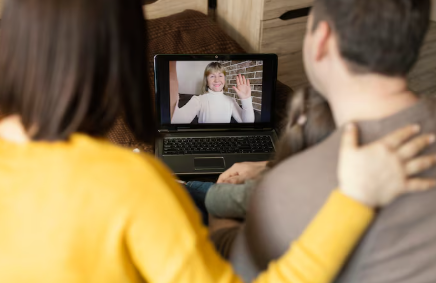
Protect the appointment time. Arrange cover for responsibilities that would otherwise interrupt you, including childcare where needed.
Choose your space. Check that you can speak at a normal volume without being overheard. Let others know you need uninterrupted time.
Check your connection. Test your camera, microphone and headphones, and place your device on a stable surface.
Reduce distractions. Close work messages and silence unnecessary notifications.
Agree on a backup plan. Ask your therapist how you will reconnect if the call drops.
Leave a little time afterwards. If possible, avoid moving straight from a personal conversation into a meeting or another demanding task.
You do not need a perfectly organised account of what is wrong. A starting point might simply be, “I have been feeling overwhelmed, and I am not sure why.”
Common questions about online counselling
Can I continue online counselling while travelling?
Discuss your plans with your therapist before travelling. Confirm whether sessions can continue from your destination, check the time zone and make sure you will have privacy. An internet connection alone does not establish that an appointment can go ahead from every location.
Can I change between online and in-person sessions?
Ask your therapist whether both options are available and appropriate for your work together. Ewelina offers both online and in-person appointments. You can discuss which arrangement suits you as your needs or circumstances change.
How much does online counselling cost?
Check your selected therapist’s rate and appointment time before booking. The Counselling Place publishes its counselling fees and policies, and individual therapist profiles provide their rates and schedules.
Finding a way to begin
Making room for counselling can be difficult when you are already managing a lot. Online sessions may remove the journey and make regular appointments more manageable, while still giving you dedicated time to talk.
Ewelina Sawicka is a Psychologist & Supervised Counsellor at The Counselling Place. She provides counselling in English and Polish and supports clients with concerns including anxiety, stress, life transitions and relationship difficulties.
If you would like support, you can book a session with Ewelina.
Related reading
References
Scott, A. M., et al. (2022). Telehealth v. face-to-face provision of care to patients with depression: a systematic review and meta-analysis. Psychological Medicine, 52(14), 2852–2860.
Seuling, P. D., Fendel, J. C., Spille, L., Göritz, A. S., & Schmidt, S. (2024). Therapeutic alliance in videoconferencing psychotherapy compared to psychotherapy in person: A systematic review and meta-analysis. Journal of Telemedicine and Telecare, 30(10), 1521–1531. First published online in 2023.
British Association for Counselling and Psychotherapy. Online and phone counselling.